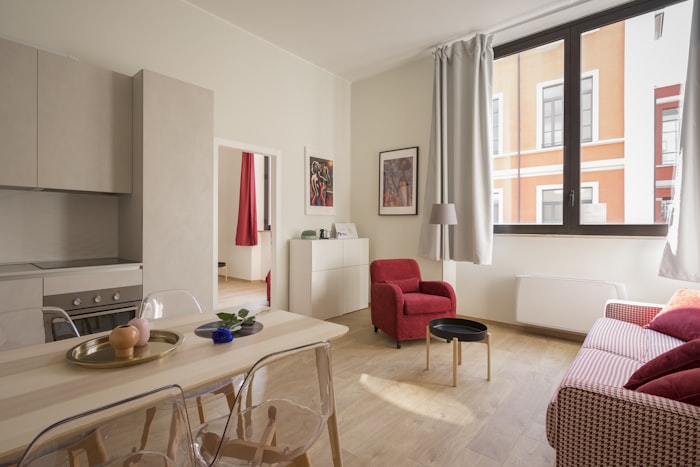
In Louisville’s stronger neighborhoods, a short-term rental earns two to three times a 12-month lease. In our NuLu two-bedroom example, it nets about $57,200 a year before management, against about $17,500 for the lease. Check your permit path first, because an investment home in a residential zone needs a Conditional Use Permit.
Last reviewed October 2026
In Louisville’s stronger neighborhoods a short-term rental generates two to three times what the same property earns on a twelve month lease. That is the headline, and it is true. It is also incomplete, because the short-term model brings higher operating costs, an annual registration, possibly a 4 to 5 month permit process, and income that arrives unevenly across the year.
This guide runs the comparison the way an owner should: neighborhood by neighborhood on revenue, then a full net cost breakdown on one NuLu two bedroom, then a decision framework, and the hybrid option a growing number of Louisville owners actually choose. We manage properties across these neighborhoods, so the numbers are working figures rather than a market report.
The Trade-Off
More revenue, but not for every property
Short-term rentals in desirable Louisville neighborhoods typically earn two to three times a long-term lease annually. Against that: higher operating costs, active management, greater income variability, and a compliance layer a lease does not carry.
Before any of the numbers matter, check eligibility. Every Louisville short-term rental needs the annual registration, and an investment property in a residential zone also needs a Conditional Use Permit, which is a public hearing process that typically takes 4 to 5 months. Old Louisville and Limerick need one even for owner-occupied properties. Run the eligibility test first, then come back to the economics.
By Neighborhood
Short-term versus lease revenue, neighborhood by neighborhood
The premium is not uniform across the city. It tracks nightly rate strength, which tracks walkability and proximity to Churchill Downs and the bourbon corridor.
| Neighborhood | Lease rent, monthly | Lease annual net | Short-term annual gross | Premium |
|---|---|---|---|---|
| NuLu | $1,600 to $2,100 | about $17,000 | $55K to $75K | 150 to 200% |
| Shelby Park | $1,200 to $1,600 | about $13,000 | $38K to $55K | 130 to 180% |
| Downtown | $1,500 to $2,000 | about $16,000 | $48K to $68K | 130 to 180% |
| Old Louisville | $1,100 to $1,500 | about $12,000 | $33K to $50K | 120 to 170% |
| Clifton | $1,300 to $1,700 | about $14,000 | $32K to $47K | 80 to 130% |
Apples to Apples
The real cost comparison, on one NuLu 2BR
Gross revenue comparisons flatter the short-term model. Net is the honest version, so here is the same property run both ways.
| Line item | Long-term rental | Short-term, managed |
|---|---|---|
| Annual gross revenue | $21,600 at $1,800 a month | $65,000 |
| Property management | Depends on the manager | Depends on the manager |
| Vacancy allowance | minus $1,800, one month | Built into occupancy |
| Maintenance | minus $1,500 | minus $3,000 |
| Utilities and supplies | Tenant paid | minus $3,600 |
| Insurance | minus $800 | minus $1,200 |
| Net before management | about $17,500 | about $57,200 |
About 3.3 times the income before management
Management comes out of both columns, and its cost depends on the property and the help you need. Three more things sit outside that table and belong in your model: the one-time furnishing and staging outlay, the 8.5% Metro transient room tax plus state taxes collected on top of the nightly rate, and the cost and delay of a Conditional Use Permit if your property needs one. None of them change the direction of the answer, all of them change the first-year number.
The Framework
When to choose each model
Location and eligibility both work
- The property is in NuLu, Shelby Park, Old Louisville, Clifton, or Downtown
- The parcel is eligible, either as your primary residence or through a CUP you are willing to pursue
- You want to maximize return on the asset
- You are within about 20 minutes of Churchill Downs
- No HOA or deed restriction blocks short stays
- You are willing to use professional management
Demand or eligibility says lease
- The property sits in a low-demand area away from the corridors
- The parcel is industrial, in a planned development district, or in one of the nine suburban cities that prohibit short-term rentals
- You want passive income
- An HOA or deed restriction prohibits short stays
- Cash flow certainty matters more than maximizing return
- You are not prepared to furnish and stage the property
The hybrid option more Louisville owners are choosing
A growing number of owners run a seasonal model: short-term from March through October, which captures Derby, summer, and the bourbon festival season, then a longer tenancy through the slow winter months. It captures most of the revenue premium while smoothing the trough. Two things to check before you plan it: your registration and any permit conditions have to cover the short-term months, and stays of 30 or more continuous days fall outside the transient tax entirely.
Questions
Frequently asked questions
Is an Airbnb worth more than a long-term rental in Louisville?
In the stronger neighborhoods, yes, typically two to three times the annual revenue and, in the NuLu example above, about 3.3 times the net income before management. The premium narrows as you move away from the walkable corridors: NuLu runs 150% to 200% above a lease while Clifton runs 80% to 130%. It assumes an eligible parcel, an active calendar, and furnishing capital up front.
Does using a property manager make the short-term model worth it?
In Louisville’s top neighborhoods, yes. Professional management adds to gross revenue through dynamic pricing and better listing positioning, and it takes the daily work off your plate. The concentration of revenue in Derby week and bachelorette weekends is what makes active pricing worth so much here.
Can I run a seasonal or hybrid model?
Yes, and a growing number of Louisville owners do: short-term from March through October to capture Derby, summer, and bourbon season, then a longer tenancy through the winter. Confirm that your registration and any permit conditions cover the short-term months, and note that stays of 30 or more continuous days sit outside the Metro transient room tax.
What if I want to use the property myself sometimes?
The short-term model is fully compatible with owner use. You block the dates you want and the property is unavailable to guests for those nights, and most professional managers accommodate owner stays with reasonable notice. A twelve month lease cannot offer that at all, which for some owners decides the question before the revenue does.
How do I know which model is right for my specific address?
Venturebnb runs a free side-by-side projection for any Louisville address: a short-term revenue estimate against the current market rent, with realistic cost breakdowns and a check on whether the parcel needs only registration or a Conditional Use Permit. We’ll give you a straight answer, even when that answer is a lease.
Working out location too? The best areas for Airbnb in Louisville ranks the city, and the earnings detail for NuLu, Shelby Park, and Old Louisville shows what each one produces. For the rules, see the permit and compliance guide. If the real question is whether to run it yourself or hire a manager, is Airbnb property management worth it? works through the cost and the hours.
Sources and currency: revenue, rent, cost and net figures are Venturebnb estimates for Louisville built from our managed portfolio and comparable listings, reviewed August 2026. Long-term rents are market estimates for comparable two bedrooms. Registration, Conditional Use Permit and transient tax details come from Louisville Metro’s short-term rental rules under the 2023 ordinance. Net comparisons exclude financing and one-time furnishing costs, and are illustrative rather than a forecast for your property.