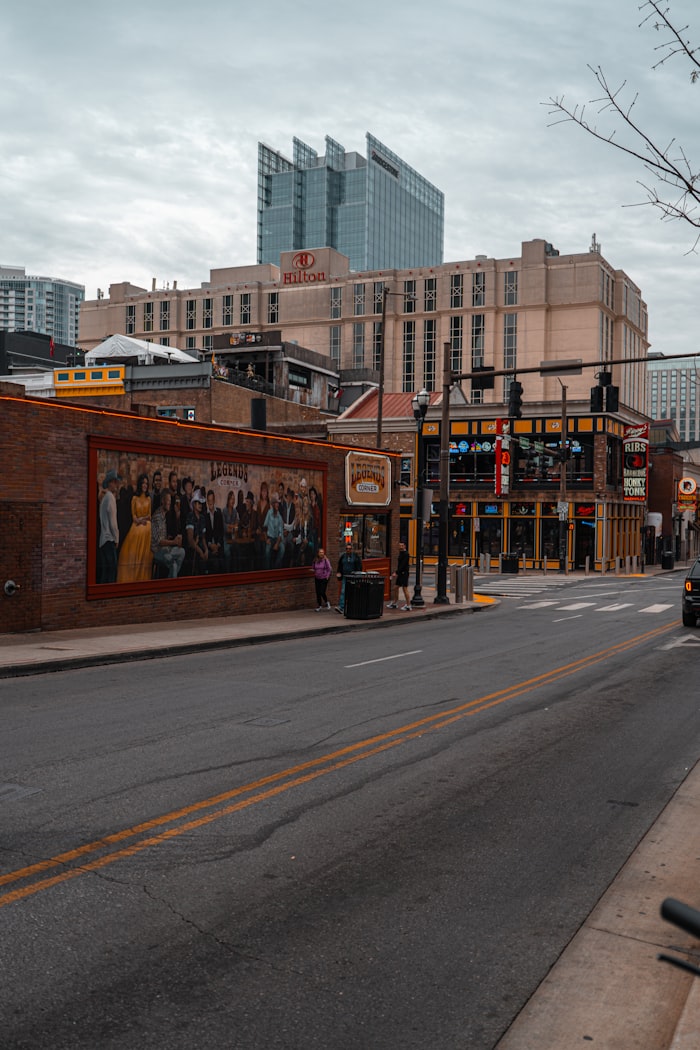
The Gulch commands the highest nightly rates in Nashville, and it earns them with a guest mix almost no other neighborhood has: bachelorette groups on the weekends, corporate travelers midweek, and medical visitors filling whatever is left. Rates run $350 to $650 a night at 76% to 85% occupancy, and a professionally managed two bedroom generates roughly $102,000 a year. What your specific unit does depends on the tower, the calendar, and one building-level question most buyers ask far too late.
This is the full picture: revenue by property size, how rates move between the Gulch Core and the 8th Avenue Connector, the four demand streams behind the occupancy, and an honest net breakdown at Gulch cost levels. We manage Gulch properties, so these are working numbers rather than a market report.
The Overview
What a Gulch Airbnb actually earns
The Gulch is Nashville’s luxury high-rise district, one of the first LEED-certified neighborhoods in the South and a five-minute walk from Lower Broadway. Guests pay a premium for glass towers, rooftop pools, and a front door within walking distance of everything, and no other Nashville neighborhood commands rates like it.
A professionally managed two bedroom generates roughly $102,000 a year, which works out to about a $350 average nightly rate at 80% occupancy. That is the strongest per-unit revenue in the city. You can see how it compares in our guide to the best areas for Airbnb in Nashville.
The guest mix is the real story. Bachelorette groups take the weekends, corporate travelers take the weekdays, and medical conventions fill the gaps. Three demand streams that rarely dip at the same time, which is why Gulch occupancy holds at 76% to 85% while much of the city runs below it.
Verify the building before you underwrite the unit
Building rules decide this market. Some Gulch towers restrict short-term rentals entirely, and permit-eligible buildings carry a resale premium for exactly that reason. Confirm the building’s short-term rental status, in writing, before you run any of the numbers below on a specific condo. A Metro permit does not override an HOA or condo declaration.
By Property Size
Gulch revenue estimates by property size
These ranges assume year-round availability and dynamic pricing. A two bedroom that captures CMA Fest week at peak rates and holds firm corporate pricing midweek lands at the top of its range. A statically priced calendar in this district leaves five figures on the table every year.
| Property size | Nightly rate | Occupancy | Estimated annual revenue |
|---|---|---|---|
| Studio / 1BR | $250 to $375 | 78 to 85% | $70,000 to $95,000 |
| 2BR core product | $350 to $500 | 78 to 85% | $95,000 to $125,000 |
| 3BR | $450 to $600 | 76 to 82% | $120,000 to $160,000 |
| 4BR and up | $550 to $650 and above | 74 to 80% | $150,000 to $190,000 |
Tower by Tower
Rates vary by block, and by building
The Gulch is compact enough that people assume it prices as one market. It does not. Position relative to Broadway and the age of the tower both show up in the nightly rate.
| Sub-zone | Nightly rate | Occupancy | Average month |
|---|---|---|---|
| Gulch Core, 11th Avenue | $400 to $650 | 80 to 88% | about $10,200 |
| Midtown Gateway, around the Adelicia | $350 to $500 | 78 to 85% | about $9,200 |
| 8th Avenue Connector | $350 to $450 | 76 to 83% | about $8,800 |
The 8th Avenue Connector is the accessible entry point into the district: a lower buy-in with rates within about 15% of the core, which on a yield basis often makes it the better trade.
Demand Stack
Why Gulch rates stay high year-round
Four demand streams, peaking at different times, on the same block. That is the structural reason this district does not have a real off-season.
Bachelorette season
Nashville is America’s bachelorette capital, and Gulch high-rises with rooftop pools are the trophy booking. From late spring through summer, weekend demand is relentless and price-insensitive.
- Weekend minimum stays protect the rate
- Group-friendly layouts book first
- House rules need to be explicit and enforced
Corporate travel
Amazon’s and Oracle’s Nashville expansions put thousands of corporate travelers within blocks of The Gulch. Midweek business stays fill exactly the nights bachelorette groups do not want.
- Books on shorter notice, pays full rate
- Desk, fast wifi, and a quiet bedroom matter
- Keep midweek dates open year-round
Vanderbilt medical demand
Vanderbilt University Medical Center draws a steady rotation of conventions, visiting physicians, and medical families who book upscale units close to campus, all year, with long lead times.
- Longer average stays, lower turnover cost
- Off-season bookings when leisure dips
- Reliable repeat guests
CMA Fest and the event calendar
Nashville hosts more than 190 major events a year, and CMA Fest in June is the single highest-earning week. The Gulch’s walk-to-Broadway position captures peak pricing on every one of them.
- CMA Fest is the year’s revenue anchor
- Arena and stadium dates lift ordinary weekends
- Price date by date
Net Returns
What you actually keep after costs
At Gulch revenue levels the percentages look similar to the rest of the city but the dollars do not. Here is the arithmetic on a two bedroom grossing $102,000, using a 22% management fee.
| Line item | Annual amount |
|---|---|
| Gross short-term rental revenue | $102,000 |
| Management fee at 22% | minus $22,440 |
| Supplies and restocking | minus $2,400 |
| Maintenance and repairs | minus $3,000 |
| Permit, insurance and utilities | minus $4,800 |
| Net operating income | about $69,360 |
On an $800,000 condo, roughly 8.7% net yield before HOA dues
Against something closer to 4% net for a long-term rental on the same unit. Two caveats worth taking seriously: HOA dues in Gulch towers are not trivial and sit outside that number, and the whole calculation assumes the building actually permits short-term rentals. Rerun it with your own purchase price, dues, and debt.
Management
Self-managed versus managed, on the same unit
In a $350-a-night market, the cost of an unbooked weekend is the entire argument. The gap between managed and self-managed performance is proportional, so at Gulch rates it is the largest in the city in absolute terms.
Where the revenue leaks
- Static rates through CMA Fest and 190-plus event dates
- Midweek corporate demand left unpriced
- Slow replies, which cost search ranking and bookings
- One platform instead of several
- Listing photography that has aged with the tower
Self-managed Gulch properties typically run 15% to 25% below managed ones, which at these rates is $15,000 to $25,000 a year.
Where the fee earns itself back
- Calendars priced against the full event and corporate schedule
- Weekend minimum stays that protect peak rate
- Hotel-grade response times, which Gulch guests expect
- Multi-channel distribution and ongoing listing work
- Permit compliance and tax filings handled
The fee is a percentage. The gap it closes is measured in the same currency, and here it is bigger.
Questions
Frequently asked questions
How much can I earn from an Airbnb in The Gulch?
Estimated gross revenue runs about $70,000 to $95,000 for a studio or one bedroom, $95,000 to $125,000 for a two bedroom, $120,000 to $160,000 for a three bedroom, and $150,000 to $190,000 for four bedrooms and up. A professionally managed two bedroom averages around $102,000 a year, which is roughly a $350 nightly rate at 80% occupancy and the strongest per-unit revenue in Nashville. Those ranges assume year-round availability, dynamic pricing, and a building that permits short-term rentals.
Do all Gulch buildings allow short-term rentals?
No, and this is the question to settle first. Some Gulch towers restrict short-term rentals entirely, and buildings that do allow them carry a resale premium for that reason. A Metro STRP permit does not override a condo declaration or HOA rules, so get the building’s status in writing before you buy or underwrite a unit. We check this as part of a free evaluation.
Which part of The Gulch earns the most?
The Gulch Core along 11th Avenue leads at $400 to $650 a night and 80% to 88% occupancy, averaging around $10,200 a month. The Midtown Gateway blocks near the Adelicia run $350 to $500 at 78% to 85%, about $9,200 a month. The 8th Avenue Connector trades at $350 to $450 and 76% to 83%, roughly $8,800 a month, and is the most accessible entry point into the district.
Should I self-manage or use a property manager in The Gulch?
Professional management typically adds 15% to 25% to gross revenue through dynamic pricing, better listing positioning, and faster guest response. At Gulch rates that gap is worth roughly $15,000 to $25,000 a year, far more than the fee itself. Gulch guests also expect hotel-grade responsiveness, and at $350 to $650 a night every unbooked weekend is expensive.
When should I open my Gulch calendar for CMA Fest?
By the preceding fall at the latest. CMA Fest guests book three to nine months out, so open June dates as soon as the festival is confirmed and set peak rates immediately rather than discounting into the window. Keep midweek dates open year-round for corporate travelers, who book on shorter notice but pay full rate.
Comparing neighborhoods before you buy? The best areas for Airbnb in Nashville ranks the whole city, and the earnings pictures for East Nashville and Germantown cover the two strongest alternatives at lower entry prices. If permits are the open question, start with is my Nashville property right for Airbnb?
Sources and currency: rate, occupancy, sub-zone and revenue figures are Venturebnb estimates for The Gulch built from our managed portfolio and comparable listings, reviewed August 2026. They assume year-round availability, dynamic pricing, a building that permits short-term rentals, and a valid Metro STRP permit. Net and yield examples are illustrative, exclude HOA dues and financing, and are not a forecast for your unit.